

The best natural pest control for a kitchen garden starts with prevention: well-fed plants, a clean garden, and crop rotation. From there, spot pests early, remove them by hand or block them with row covers, and let beneficial insects help. Save organic sprays like Bt and insecticidal soap for last.
This guide covers each step, including how to identify the most common kitchen garden pests by season and by the damage they leave.
The pests below are grouped by the season they usually appear in Atlanta and across the Southeast. Depending on where you live, your timing may shift by a few weeks.
How to prevent pests in a kitchen garden
Healthy plants in a clean kitchen garden are your best defense. Stressed plants attract pests and struggle to recover, while strong ones can shrug off a little damage.
Feed your plants properly. Compost builds good soil, but on its own it often isn’t enough to feed hungry vegetables. Add a fertilizer such as fish emulsion during the growing season. Water consistently, too, because steady moisture is what lets everything else work.
Clean up as you go. Remove dead leaves and diseased plants instead of leaving them in the bed, where pests and diseases hide and overwinter. Sanitize pruners and other tools so you don’t carry problems from plant to plant.
Rotate your crops. Many pests and diseases target one plant family, and they build up when that family grows in the same spot year after year. Move each group (tomatoes and peppers, squash and cucumbers, cabbage and kale) to a different bed each season.
Plant native species. Native flowers and shrubs around your beds feed the predatory insects that keep pests in check. They’re also adapted to your local conditions, so they need less care.
Common spring garden pests
As the garden wakes up, watch for Japanese beetles, flea beetles, and spider mites.
Japanese beetles. These invasive beetles aren’t native to Georgia, and they’ll eat almost anything, feeding on hundreds of plant species. Adults are easy to spot, with a metallic green head and coppery wings. Their larvae are C-shaped, cream-colored grubs with tan heads and visible legs that live in the soil.
Handpick adults early in the morning, when they’re sluggish, and drop them into a bucket of soapy water.
Flea beetles. These tiny beetles are usually black but can be brown, blue, or bronze, and some have stripes. They jump like fleas when disturbed and chew small, round holes in leaves. Seedlings are most at risk, so protect them with row covers until they’re established.
Spider mites. Spider mites are almost too small to see, so look for their signs instead: fine webbing on the plant and droopy leaves. They flare up as the weather turns warm and dry. A strong spray of water knocks them off, and insecticidal soap handles heavier infestations.
Common summer garden pests
Summer brings the pests that go after tomatoes and the squash family: hornworms, squash vine borers, and cucumber beetles.
Tomato hornworms. These are big caterpillars, 2 to 4 inches long, green with white stripes and a horn on the rear end. They strip leaves and chew large holes in tomatoes, and they’ll also feed on peppers, eggplant, and potatoes. Their color is excellent camouflage, so look for dark droppings on the leaves below, then follow the trail up and handpick.
Squash vine borers. The adult is a black-and-orange moth that flies during the day, often hovering around squash and zucchini. Its cream-colored larvae tunnel into the stem and eat the plant from the inside, so a healthy-looking plant can wilt almost overnight. Check the base of the stems for small holes and sawdust-like debris, and keep young plants under row covers until they flower.
Cucumber beetles. These small beetles have long antennae and come in spotted or striped versions, usually yellow and black. They chew the leaves and flowers of cucumbers, melons, and squash. The bigger danger is the disease they spread, especially bacterial wilt, so catch them early with yellow sticky traps and row covers on young plants.
Common fall and winter garden pests
Cool-season crops have pests of their own. Kale, cabbage, collards, and late peppers are their favorite targets.
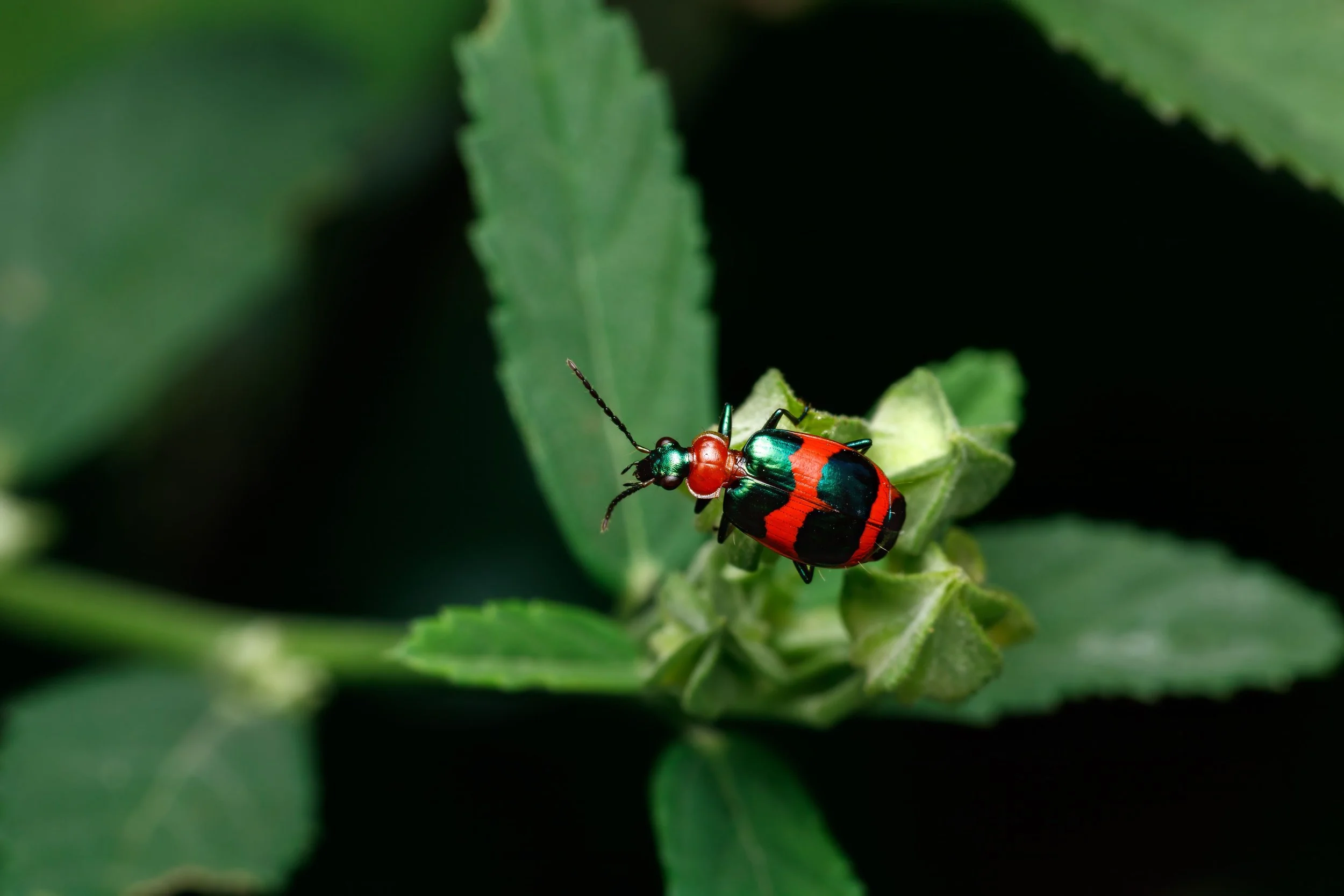
Harlequin bugs. Often called harlequin beetles, these are actually a type of stink bug. They have a shield-shaped body with bold black markings over red, orange, or yellow, which earns them the nickname “calico bug.” They suck sap from leafy greens, leaving pale, blotchy patches, so handpick adults and check under leaves for their eggs.
Aphids. There are roughly 5,000 species of aphids, all small and pear-shaped, and they usually gather in clusters on leaves and stems. If you see ants marching up a plant, look for aphids. The two have a symbiotic relationship: ants protect aphids in exchange for the sweet honeydew they produce.
Cabbage loopers. The adult is a moth that lays small white eggs on the undersides of leaves. The larvae are green caterpillars with white stripes that chew ragged holes in leafy greens. Flip leaves regularly to catch eggs and young caterpillars before the damage adds up.
Armyworms. Adult moths lay their eggs in masses, and when they hatch, an “army” of caterpillars moves through the garden together. They can strip plants quickly, so act as soon as you spot them.
Hands-on organic pest control methods
Once pests show up, start with physical controls. They target the problem without harming the rest of your kitchen garden.
Row covers. Lightweight fabric over hoops keeps flying pests off your plants, and in winter it doubles as frost protection for greens. Uncover squash and cucumbers once they flower so pollinators can reach them.
Sticky traps. Yellow sticky cards catch flying pests like aphids and cucumber beetles. They also show you what’s around before it becomes a real problem.
Handpicking. Pick off large pests like hornworms, Japanese beetles, and harlequin bugs, and drop them into soapy water. Check the undersides of leaves for eggs while you’re at it.
Strong water spray. A hard blast from the hose knocks aphids and spider mites off plants. Spray in the morning so leaves dry before evening.
Diatomaceous earth. This fine powder is made from fossilized algae, and its sharp edges damage soft-bodied insects. It only works when dry, so reapply after rain or watering, and wear a mask when you dust it on.
Biological pest control: helpful plants and insects
Let nature do some of the work by choosing smart plant neighbors and welcoming insects that eat pests.
Companion planting. Flowering herbs such as dill, cilantro, and sweet alyssum attract helpful insects to your kitchen garden. Some plants work as decoys: nasturtiums, for example, can lure aphids away from your crops.
Encourage beneficial insects. Ladybugs, lacewings, hoverflies, and tiny parasitic wasps prey on aphids, caterpillars, and other pests. Give them flowers (especially natives) and avoid broad-spectrum sprays that kill them along with the pests.
If you find a hornworm covered in small white cocoons, leave it alone. Those are parasitic wasps, and when they hatch, they’ll go hunting for more hornworms.
Organic pest control sprays: when and how to use them
If prevention and hands-on methods aren’t enough, reach for a targeted organic spray. These are gentler than synthetic pesticides, but they’re still pesticides, so use them sparingly and follow the label.
Bt (Bacillus thuringiensis). Bt is a naturally occurring bacterium that kills caterpillars such as loopers, hornworms, and armyworms while leaving people, pets, and most other insects unharmed. Mix it with a spreader-sticker like Nu-Film so it clings to waxy leaves like kale and collards. Spray only the plants under attack, since Bt also kills butterfly caterpillars.
Insecticidal soap. Soap sprays kill soft-bodied pests like aphids and spider mites on contact. They have to hit the insects directly and leave no lasting residue, so plan on repeat applications.
Neem oil. Pressed from the seeds of the neem tree, this oil discourages feeding and disrupts insect growth. It can burn leaves in hot summer sun, so apply it in the evening.
Pyrethrin sprays. Products such as PyGanic use pyrethrins, natural compounds from chrysanthemum flowers that attack insects’ nervous systems. They kill a wide range of insects, including bees and other beneficials, so save them for serious infestations and spray at dusk when pollinators aren’t active.
Frequently asked questions about kitchen garden pest control
What is the best natural pest control for a kitchen garden?
The best approach layers several methods instead of relying on one spray. Start with prevention (good nutrition, cleanup, and crop rotation), then handpick pests, use row covers, and welcome beneficial insects. Save organic sprays like Bt and insecticidal soap for serious problems.
How often should I check my kitchen garden for pests?
Check at least twice a week, and more often during peak pest season. Look under leaves, at the base of stems, and on new growth, where eggs and young insects hide. Catching pests early is the difference between a few chewed leaves and a lost crop.
Why are there holes in my kale and collards?
Large, ragged holes usually mean cabbage loopers or armyworms, while many tiny round holes point to flea beetles. Check the undersides of leaves for caterpillars and eggs. Pale blotches without holes suggest harlequin bugs.
Is neem oil safe to use on vegetables?
Yes, as long as you choose a product labeled for edible crops and follow its directions. Apply it in the evening, never in hot afternoon sun, because it can burn leaves. Test it on a few leaves first, and rinse produce before eating.
Can I use dish soap instead of insecticidal soap?
It’s better not to. Most dish soaps are detergents, not true soaps, and their degreasers and fragrances can damage leaves. Insecticidal soap is made to kill soft-bodied pests while staying gentle on plants.
How long after spraying can I harvest vegetables?
Check the product label for the pre-harvest interval, which is the required wait between spraying and picking. Many organic products allow harvest the same day, but the wait varies by product and crop. Always wash produce before eating.
Is Bt safe for bees, pets, and people?
Yes. The Bt sold for garden caterpillars affects only caterpillars that eat treated leaves, so it’s safe for bees, pets, and people. Because it also kills butterfly caterpillars, spray only the plants under attack.
Does companion planting really keep pests away?
The strongest evidence supports flowers and herbs that attract beneficial insects, such as dill, cilantro, and sweet alyssum. Claims that certain plants repel pests are more mixed. Treat companion planting as one helpful layer, not a cure.
When are garden pests the worst in Atlanta?
Atlanta’s long growing season means pests are active in almost every season. Japanese beetles and flea beetles arrive in spring, and hornworms and squash vine borers peak in summer. Harlequin bugs, aphids, and cabbage loopers move in on fall and winter greens.
A simple weekly pest-control routine
A few minutes of attention each week keeps most kitchen garden pest problems small. Walk your garden a couple of times a week, flip leaves to look for eggs and insects, and deal with what you find right away.
Keep plants fed and watered, clear out dead or diseased growth, and plan next season’s rotation. When a pest is clearly winning, choose the gentlest, most targeted option that will do the job. Your harvest, and the helpful insects in your garden, will thank you.
About Pixels to Petals
Pixels to Petals helps Intown Atlanta residents trade screen time for green time. We plan, design, and grow kitchen gardens in Buckhead, Decatur, Virginia Highland, Grant Park, Ormewood Park, Summerhill, Inman Park, and nearby neighborhoods. Every garden is built to help you effectively address Atlanta’s red clay and its long, four-season growing calendar.
We made the same move from the digital world to the garden ourselves, so we know how to make growing approachable for busy people. A garden consultation gives you a clear plan for your space, and a custom garden design maps out what to plant, where, and when. If you’d rather not build it yourself, we offer garden installation, too.
When pests show up, you don’t have to figure them out alone. Our garden coaching offers ongoing support through every season, from identifying a mystery bug to planning next year’s crop rotation. Book a garden consultation and let’s help you get your kitchen garden started.