

No Yard? No Problem: The Luxury Apartment Dweller's Guide to Growing Real Food
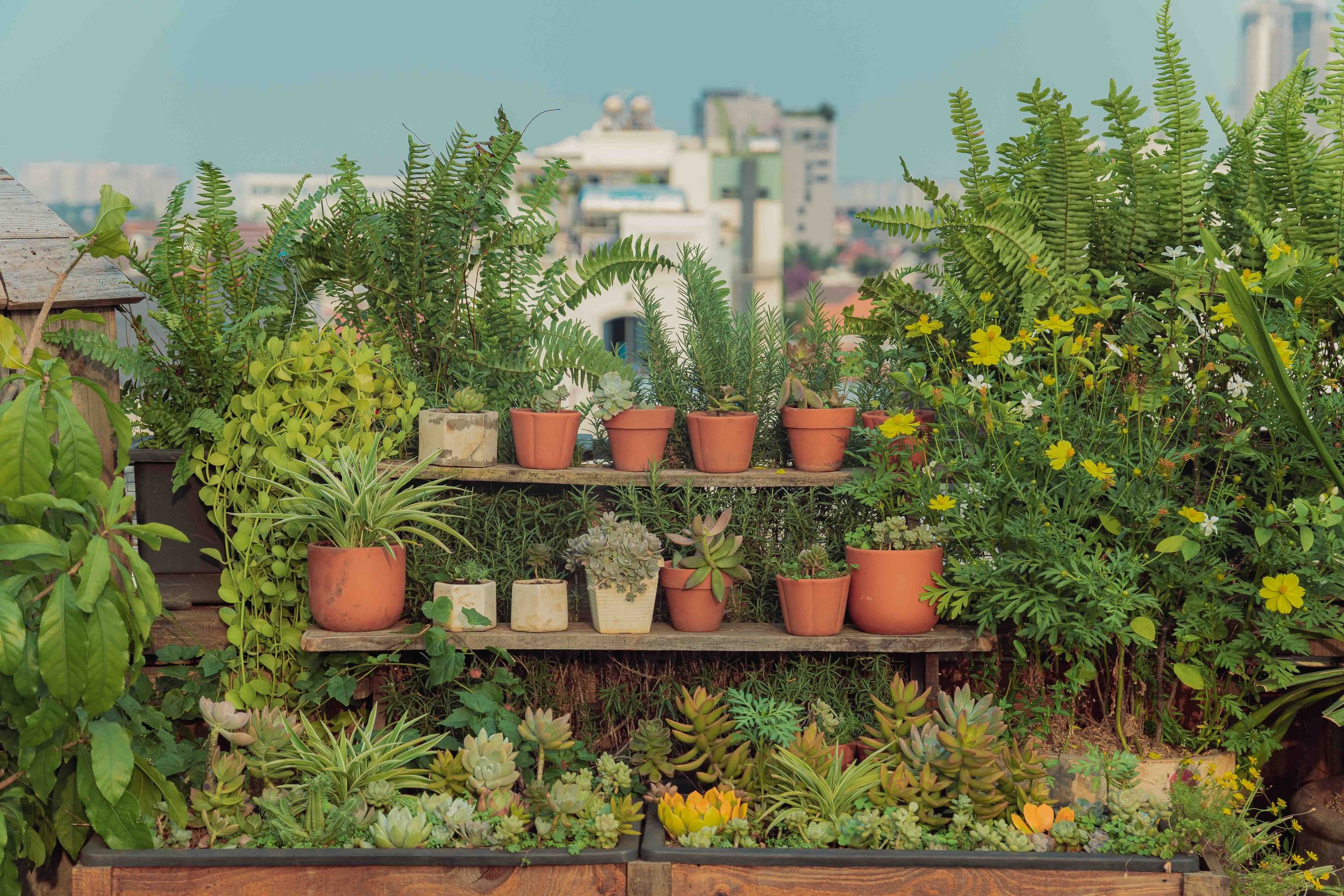
There's a persistent myth in gardening, and it goes like this: real food comes from real gardens, and real gardens require a yard. Rows of vegetables, a tool shed, a compost pile in the corner — the whole suburban homestead picture. If you live in a luxury apartment or condo in Midtown, Old Fourth Ward, or Inman Park, the myth says the best you can hope for is a supermarket basil plant slowly dying on your windowsill.
The myth is wrong. Completely, demonstrably wrong.
Here's what's actually true: a well-planned container garden on an apartment balcony or terrace in Atlanta can produce fresh herbs every single week of the year, salad greens through fall, winter, and spring, and a summer's worth of tomatoes, peppers, and cucumbers — real food, grown by you, steps from your kitchen. This isn't wishful thinking. It's exactly the kind of growing the University of Georgia Cooperative Extension has been publishing research-based guidance on for decades. UGA's own Gardening in Containers guide notes that container growing has often provided the only way to garden for apartment and condominium dwellers — and that it's especially rewarding for people whose entire outdoor space is a patio, deck, or balcony.
So let's retire the myth and replace it with a plan. Here's how to grow real food without a single square foot of yard.
First, an Attitude Adjustment: Your Apartment Is a Gardening Advantage
Before we get tactical, consider what you're not dealing with. You have no Bermuda grass to fight, no deer or rabbits raiding your lettuce, no quarter-acre of Georgia red clay to break, amend, and battle. Ground-level gardeners in Atlanta spend their first season wrestling with compacted clay soil so notorious that "get your soil tested" is the first commandment of local gardening. You get to skip all of it.
Container gardening means you choose your soil — a premium potting mix, blended for drainage and root health, fresh out of the bag. You choose your sun exposure by moving pots. You garden standing up, or from a chair, without kneeling in mud. And because your plants live above street level, many of the pests and diseases that plague in-ground gardens simply never find them. As UGA Extension's urban container gardening guidance points out, well-managed container growing sidesteps a whole category of soil-borne disease problems from the start.
Your apartment isn't a limitation. It's a controlled environment. Chefs would call that an advantage.
Step One: Read Your Light Like a Grower
Every food-growing decision starts with sunlight, so spend a few days learning your space before you spend a dollar. Vegetables that flower and fruit — tomatoes, peppers, cucumbers, squash — need six to eight hours of direct sun. Leafy greens and many herbs will produce happily on four to six. Note when the sun hits your balcony, when the building across the street steals it, and how the pattern shifts through the day.
A west- or south-facing exposure in Atlanta is a fruiting-vegetable paradise (and, in July, a watering commitment — more on that shortly). An east-facing balcony with gentle morning light is ideal for lettuce, spinach, arugula, cilantro, and parsley. Even a mostly shaded north-facing space can grow mint, chives, and salad greens. There is no exposure in this city that grows nothing. The only mistake is planting sun-lovers in shade and wondering why they sulk.
Step Two: Containers and Soil — Where Most Beginners Win or Lose
If there's one section of this article to read twice, it's this one, because container choice and soil quality decide more outcomes than any other factor.
Go bigger than feels necessary. The single most common beginner mistake is pots that are too small. Small pots dry out in hours in a Georgia summer, starve roots of space, and produce stressed, stingy plants. Annual herbs like basil want a one- to two-gallon pot at minimum. A full-size tomato wants five gallons or more. Bigger containers hold moisture longer, buffer roots against temperature swings, and are dramatically more forgiving of a missed watering.
Drainage is non-negotiable. Every container needs holes, full stop. UGA's container gardening publication is blunt about this: poorly drained potting mix stresses roots and invites root-rotting fungi, and plants in soggy containers fail to grow properly or die outright. Pair pots with saucers to protect your balcony surface and your downstairs neighbor's patience.
Buy potting mix, never "garden soil." Bagged garden soil is too heavy for containers — it compacts, drains poorly, and suffocates roots. A quality potting mix is engineered for exactly your situation. Many mixes include enough fertilizer for the first several weeks; after that, feed regularly with an organic vegetable fertilizer, because container plants can't send roots deeper in search of nutrients the way in-ground plants can.
Mind the practicalities of apartment living. Check your building's rules on railing planters and weight limits, favor heavier or secured pots if you're on a windy upper floor, and consider self-watering containers if your travel schedule is unpredictable. These small decisions up front prevent nearly every apartment-gardening headache.
Step Three: Grow What You'll Actually Eat
The fastest way to fall in love with food gardening is to grow the things you already buy every week. For most Intown apartment kitchens, that list starts with herbs — and herbs happen to be the highest-value crop per square inch you can grow. A single healthy basil plant out-produces a summer's worth of those $4 plastic clamshells. Rosemary, thyme, oregano, and chives are nearly indestructible perennials in our climate. Mint thrives in a pot (and only in a pot — in the ground it's an invader; on your balcony it's contained and well-behaved).
From there, build out by season. Atlanta sits in Zone 8a with a growing season that stretches well past 230 frost-free days, which means your balcony can produce in all four seasons — a rhythm laid out month by month in UGA's Vegetable Garden Calendar. In spring and summer, that means compact "patio" tomato varieties, cherry tomatoes (astonishingly productive in a five-gallon pot), peppers, bush cucumbers, and eggplant. In fall and winter — the seasons yard-owners waste and apartment gardeners can own — it means lettuce, spinach, kale, arugula, and cilantro, all of which prefer Atlanta's cool months and shrug off our mild frosts. For proven varieties suited to Georgia conditions, UGA's Vegetable Gardening in Georgia guide is the reference we point clients to again and again, and our own Atlanta Gardening Resources page lists the local nurseries and seed sources we trust for stocking up.
And don't overlook the wellness garden. Chamomile, lemon balm, calendula, and lavender all thrive in containers, turn your balcony into a pollinator stopover, and turn your evenings into tea. Medicinal herb gardens are one of our specialties at Pixels to Petals precisely because they fit small spaces so beautifully.
Step Four: The Ten-Minute Daily Habit
Here's the honest maintenance picture. Container food gardening asks one thing of you consistently: water. In spring and fall, that might mean every two or three days. In the teeth of a Georgia July, exposed balcony pots may need water daily. The test is simple — push a finger an inch into the soil, and if it's dry, water thoroughly until it runs from the drainage holes. Add a monthly feeding, harvest often (herbs and greens grow back faster the more you cut them), and that's genuinely most of the job.
Ten minutes a day. Less time than you spend deciding what to watch.
And those ten minutes give back more than food. There's a long American tradition of city dwellers growing serious quantities of food in improbable spaces — during World War II, Victory Gardens on rooftops, balconies, and vacant lots supplied an estimated 40 percent of the nation's fresh vegetables. We told that story, and what it means for Atlanta today, in Dig In, Atlanta: The Victory Garden Legacy Behind Today's Kitchen Garden Movement. The through-line is worth repeating: ordinary people, without farms or yards, grew real food that mattered. Your balcony is part of that lineage. And for you personally, the daily ritual is an antidote — a few unhurried minutes with your hands on living things, in a life otherwise spent staring at glass rectangles.
About Pixels to Petals
That last point is, quite literally, our founding story. Pixels to Petals exists to help Intown Atlanta residents trade screen time for green time. Our founder spent 30 years in digital marketing before realizing the most meaningful moments of the week were happening in the garden, not the analytics dashboard — and made the pivot from pixels to plants for good. You can read the whole story here.
Today we help people across Grant Park, Inman Park, Ormewood Park, Candler Park, Summerhill, and surrounding neighborhoods build kitchen gardens and medicinal herb gardens using organic methods tailored to Zone 8a — whether that's an in-ground garden in red clay or a container garden on a high-rise terrace. If you want expert eyes on your specific space, a one-hour Garden Consulting session gives you a clear, personalized plan: what will thrive in your light, which containers and varieties to choose, and exactly what to do first. If you want a complete blueprint,Garden Design delivers a tailored layout, plant list, and seasonal plan built for year-round production. And if you want a guide alongside you as the seasons change, Garden Coaching pairs you with an expert for monthly sessions and between-session support — so when a tomato wilts or aphids show up, you have answers instead of anxiety. No experience is required for any of it; we meet you exactly where you are.
Your First Harvest Is Closer Than You Think
Somewhere in your apartment right now, there's a spot with good light and forty square feet of possibility. In a few weeks, that spot could be handing you basil for dinner. In a few months, sun-warmed cherry tomatoes you grew yourself — a flavor no grocery store has ever sold you.
You don't need a yard. You need a plan, a few good containers, and someone in your corner who knows Atlanta growing inside and out.
Book a 60-minute Garden Consultation and tell us about your space, your light, and what you'd love to eat from your own balcony. We'll give you an honest read on what's possible and how to get there — no pressure, no jargon, just the first step toward real food, grown by you.
Pixels to Petals — serving Virginia Highlands, Grant Park, Inman Park, Ormewood Park, Candler Park, Decatur, Summerhill, Midtown, Buckhead and Intown Atlanta.