

What Does a Garden Consultant Actually Do? An Atlanta Homeowner's Guide
The short answer
A garden consultant assesses your property, diagnoses what will and won't grow there, and gives you a specific written plan for building a productive garden — without selling you products or taking over your yard indefinitely. For an Intown Atlanta homeowner, that typically means a one-hour on-site visit covering soil conditions, sun exposure, drainage, and existing landscape features, followed by a written report containing plant recommendations matched to Zone 8a, soil amendment strategies for Piedmont red clay, a month-by-month planting timeline for Atlanta's growing seasons, and a prioritized list of what to do first.
The core function is decision-making, not labor. A garden consultant is hired for judgment: where the garden should go, what should be in it, when it should be planted, and in what order you should tackle it. Installation, maintenance, and ongoing coaching are separate services you may or may not want. This guide breaks down what happens in a consultation, what you receive afterward, how consultants differ from landscapers and designers, and what the service costs Atlanta homeowners.
What happens during the consultation itself
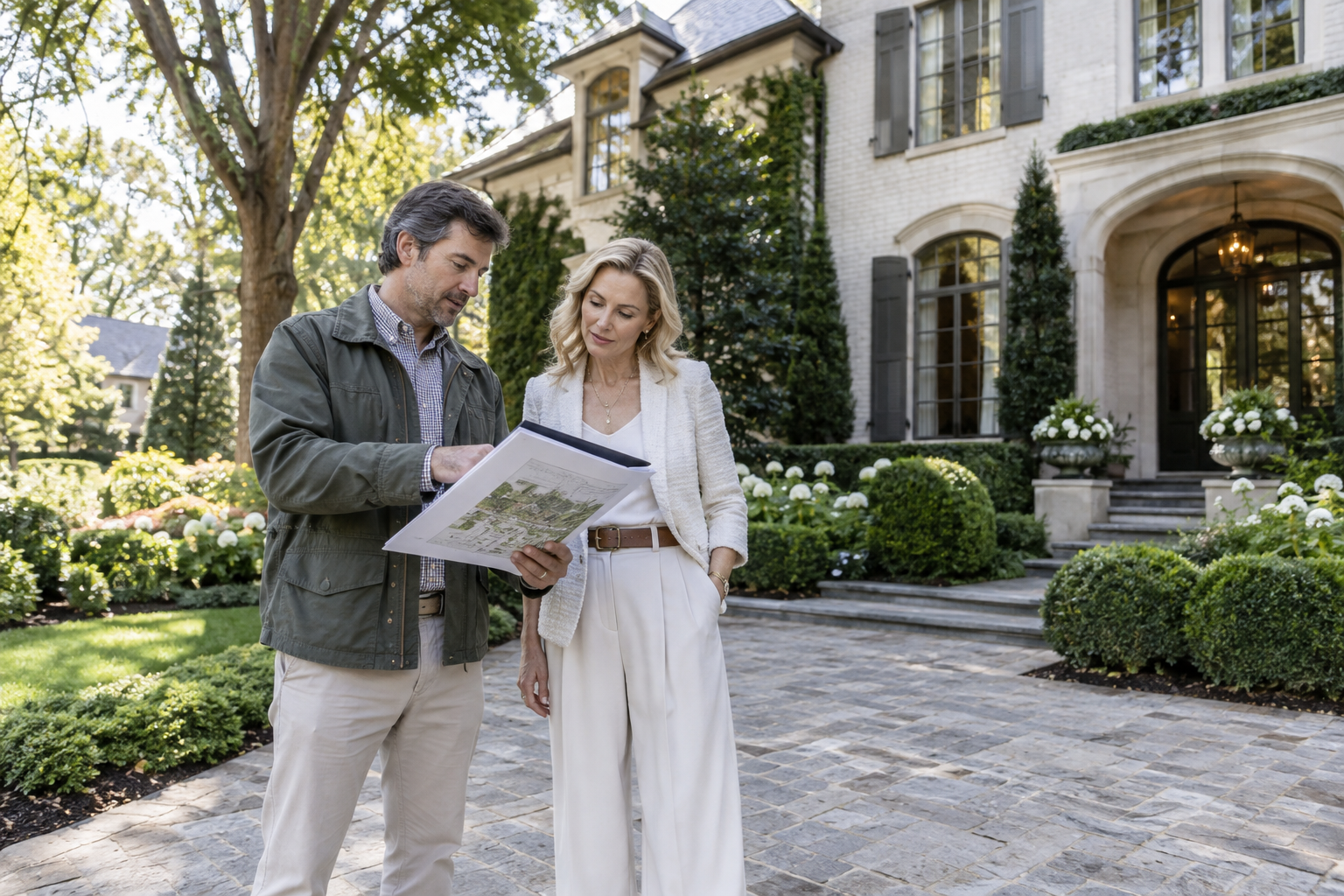
The visit is a walk-through of your actual property, not a conversation about gardening in the abstract. In Grant Park, Ormewood Park, Summerhill, Candler Park, Inman Park, and the surrounding Intown neighborhoods, a typical garden consultation covers five things.
Sun mapping. How many hours of direct sun each candidate location receives, and when. This is the single most consequential factor in an edible garden's success, and it's the one homeowners most often get wrong. Intown Atlanta's mature tree canopy — one of the densest urban canopies in the country — means many backyards that feel bright are actually delivering four hours of usable sun, not the six to eight that tomatoes, peppers, and squash require.
Soil assessment. Texture, compaction, drainage behavior, and existing organic matter. Atlanta's red clay behaves distinctly, and a consultant is reading for how much amendment the site needs and whether raised beds are required or merely advisable.
Site logistics. Distance from the kitchen door, proximity to a water source, slope and runoff patterns, deer and pest pressure, and how the space relates to the rest of your yard. A garden thirty feet farther from the house than it needed to be gets visited less, harvested less, and abandoned sooner.
Goals and constraints. What you actually want — beauty, food production, time outdoors with kids, a specific set of herbs — and how much time you realistically have. A consultant who doesn't ask this will design the wrong garden competently.
Reality-setting. What's achievable in your space in the first season, versus year two, versus year three. This is where expectations get calibrated, and it's often the most valuable ten minutes of the hour.
What you receive afterward
The deliverable is the point. A consultation without documentation is just a nice conversation in a yard.
A Pixels to Petals consultation is followed by a written report that includes specific plant recommendations for your microclimate, soil amendment strategies tailored to what's actually in your ground, planting timelines built around Atlanta's seasons rather than a generic national calendar, and prioritized action steps you can execute at your own pace. That last element matters more than it sounds. Most homeowners aren't blocked by a lack of ideas — they're blocked by not knowing which of twelve possible next steps to do first.
If you want more than a plan, the service tiers extend from there. Garden design delivers scaled layout drawings, plant lists with quantities and sources, soil prep specifications, irrigation recommendations, and a phased implementation plan. Garden coaching provides monthly one-hour sessions across a full year, so you have expert input at every seasonal transition rather than only at the start.
The five core tasks of a garden consultant
Across the industry, the work reduces to five functions. A given consultant may offer all five or specialize in a few.
Design. Translating your goals, your site's possibilities, and the style of your home into a specific garden layout.
Install. Constructing or overseeing construction of raised beds, clearing space, sourcing and placing soil, running irrigation. Some consultants do this directly; others, including Pixels to Petals, design for DIY implementation and can recommend trusted local contractors for hardscape work.
Plant and maintain. Filling the garden according to the plan and the current season, with optional return visits for seasonal turnover.
Coach and advise. Teaching what to plant each month in your specific area, how to manage pests organically, and when to perform which tasks. This is the knowledge-transfer function, and it's what separates consulting from landscaping.
Share expertise locally. Good consultants function as a resource for their community — which is why we maintain a public Gardening Resources in Atlanta directory of nurseries, extension services, seed sources, and community gardens, free to anyone.
How a garden consultant differs from a landscaper
The confusion is understandable, and it costs Atlanta homeowners real money when they hire the wrong one.
A landscaper installs and maintains ornamental plantings, lawns, and hardscape. The relationship is ongoing and service-based: they do the work, indefinitely, and you pay monthly. Most landscapers are not specialists in edible production, and many will happily install a raised bed without any particular view on what should grow in it or when.
A landscape designer produces plans for the overall property, typically with an ornamental and architectural emphasis — hardscape, structure, year-round visual interest.
A garden consultant focuses on productive edible and medicinal gardens and on transferring knowledge to you. Pixels to Petals specializes in kitchen gardens, medicinal herb gardens, and pollinator plantings rather than traditional ornamental landscaping. The goal is a garden you can run, not a service contract you can't cancel.
If you want a beautiful lawn and seasonal color, hire a landscaper. If you want to eat what's in your yard, hire a consultant.
What it costs, and what you're actually buying
Consultation pricing in Atlanta varies by scope, but the useful comparison isn't consultation-versus-free. It's consultation-versus-failed-first-attempt.
A DIY kitchen garden build in Intown Atlanta — lumber, fasteners, several cubic yards of soil, transplants, tools, irrigation, amendments — commonly runs well past $1,500. When that garden is sited in insufficient sun, filled with the wrong soil blend, or planted three weeks outside the correct window, the loss isn't partial. Most of that spend has to be repeated. The consultation fee is, functionally, insurance against making a four-figure mistake in a permanent location.
There's a second, less obvious return. A consultant steers your purchasing. Knowing which varieties actually perform in Atlanta's humidity, which nurseries stock plants grown for this climate, and which amendments your specific soil requires prevents a season's worth of wasted buying. Before any of that, a $12 basic soil test from UGA Extension's Fulton County office will tell you your pH and nutrient levels — and a consultant will tell you what to do with those numbers.
Why local knowledge is the whole product
There is no substitute for a consultant who gardens in your climate. Someone working in Intown Atlanta experiences the same rainfall, the same humidity, the same late-March frost risk, and the same brutal July as you do. They know that the tomato variety that dominates gardening media may mildew here by mid-summer, that fall is Atlanta's most underrated planting season, and that the canopy shading your neighbor's yard in June wasn't there in March when you mapped your sun.
This is regional knowledge with deep roots. Atlanta has a long history of home food production, and local institutions have been refining the practice for over a century — UGA Extension has served Fulton County since 1914. A good consultant is a conduit for that accumulated local experience, delivered specifically to your yard.
Is a garden consultant right for you?
Hire one if you're starting from scratch and want to get it right the first time, if you've already had a garden fail and don't know why, if you have limited time and need a prioritized plan rather than a research project, or if you want to learn but need structure. Skip one if you enjoy the trial-and-error process itself and have several seasons to spend on it — that's a legitimate way to learn, just a slow one.
Book a 60-minute Garden Consultation or read more about why we do this work at Pixels to Petals.
Frequently Asked Questions
What does a garden consultant do? A garden consultant assesses your property's soil, sun exposure, and drainage, then delivers a written plan specifying what to plant, when to plant it, and in what order to build the garden. They provide expertise and direction rather than ongoing labor, and they teach you to run the garden yourself.
How long does a garden consultation take? A standard garden consultation takes one hour on-site, followed by a written report delivered afterward. The report typically includes plant recommendations, soil amendment strategies, an Atlanta-specific planting timeline, and prioritized next steps.
Do I need to know anything about gardening before booking a consultation? No. Consultations are tailored to your experience level, and complete beginners who have never planted anything are among the most common clients. The session is designed to supply the knowledge you're missing.
What's the difference between a consultation, coaching, and a design? A consultation is a one-time assessment with recommendations you implement yourself; coaching provides ongoing monthly support across a season or year; a design delivers scaled drawings, plant lists, and a phased implementation plan. Many homeowners start with a consultation and add the others as needed.
Will a garden consultant plant the garden for me? That depends on the consultant. Pixels to Petals designs for DIY implementation and can recommend trusted local contractors for hardscape work like raised bed construction and irrigation, while many clients handle the planting themselves.
Can a garden consultant help with an existing garden that isn't working? Yes. Diagnosing underperforming gardens is a common reason Atlanta homeowners book a consultation — typical causes include insufficient sun, unamended red clay, poor drainage, or planting outside Atlanta's correct seasonal windows.
How much does a garden consultant cost in Atlanta? Pricing varies by scope and service tier, from a single-session consultation to a full design or twelve-month coaching engagement. The relevant comparison is against a failed DIY build, which commonly exceeds $1,500 in materials alone before accounting for replanting.