

You Don't Have Time to Learn Gardening. You Have Time to Be Taught.
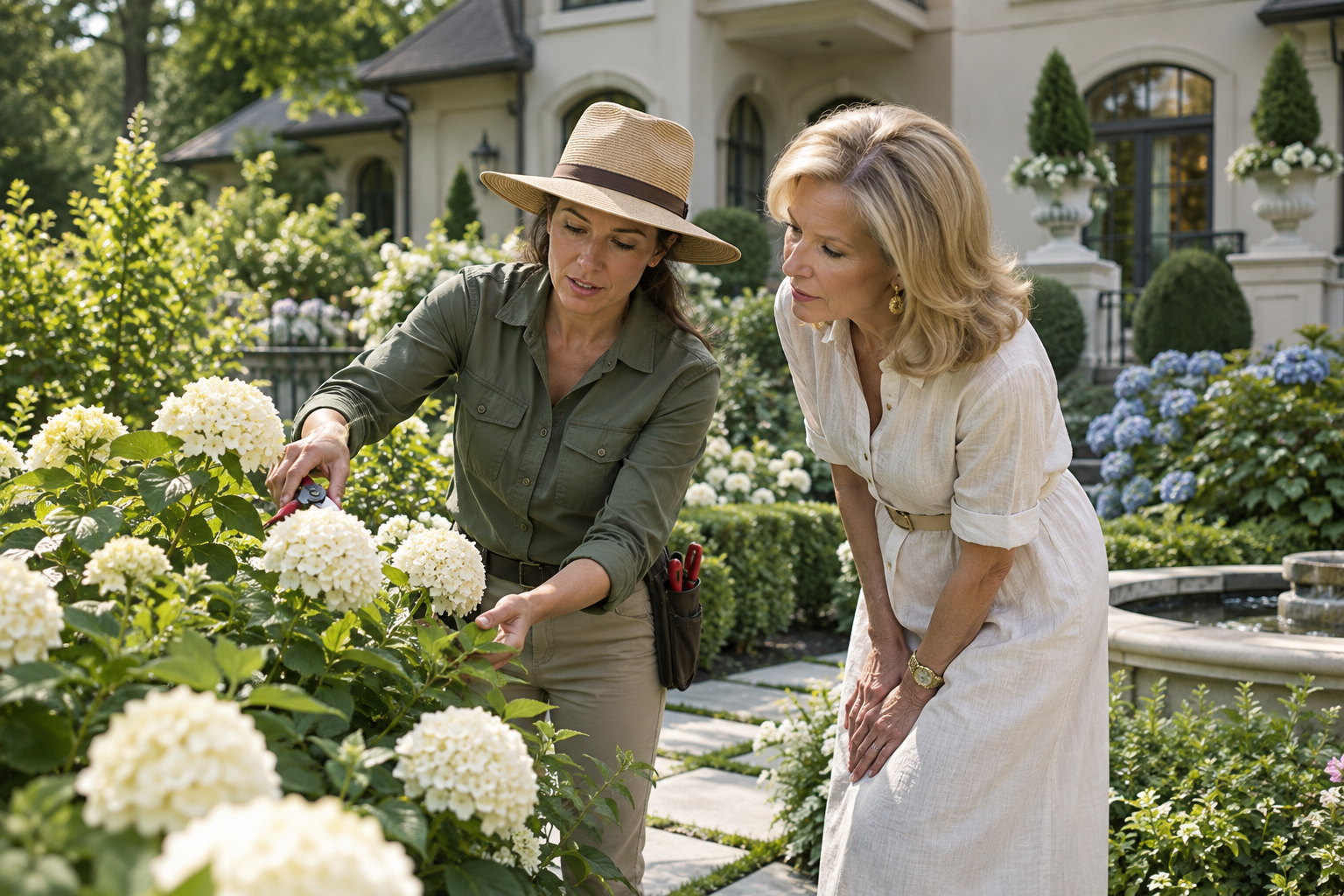
If you're a busy professional in Intown Atlanta who wants a productive kitchen garden but can't spare the two or three seasons it takes to learn Zone 8a gardening by trial and error, the fastest path is not a weekend of research — it's hiring a garden consultant to compress that learning curve into a single visit. A one-hour on-site consultation in Virginia Highlands, Grant Park, Ormewood Park, Candler Park, or Inman Park typically produces a written plan covering your soil, your sun exposure, your planting calendar, and your first three moves. Most Atlanta homeowners who hire a consultant are harvesting within eight to ten weeks, versus the two to three years it commonly takes self-taught gardeners to get past repeated crop failures.
The distinction that matters: learning to garden is a time-intensive skill acquisition. Being taught to garden is a scheduled appointment. One requires hundreds of hours you don't have. The other requires an hour, a written plan, and roughly twenty minutes a week of maintenance. This article explains the difference, what the taught path actually looks like in Atlanta, and how to tell which one you need.
Why "just look it up" fails in Atlanta specifically
Most gardening advice online is written for a national audience, which means it is written for nobody. When a popular garden blog tells you to start tomatoes in March, that advice is calibrated for a climate that is not yours. Intown Atlanta sits in USDA Zone 8a, with a last frost date that lands somewhere between late March and the second week of April depending on which side of the city you're on, and a first frost that usually holds off until mid-November. That gives you a growing season most of the country would envy — and a calendar that looks nothing like the one in the article you just read.
Then there's the soil. Atlanta's Piedmont red clay is dense, slow-draining, and nutritionally limited. It is not a minor inconvenience; it is the single most common reason new gardens in Grant Park and Ormewood Park fail in their first year. Plants go in, water pools, roots suffocate, and the homeowner concludes they have a black thumb. They don't. They have clay, and nobody told them what to do about it.
The third variable is heat. An Atlanta July is not a Zone 8a summer in the abstract — it's weeks of high humidity that invite fungal disease, plus afternoon temperatures that shut down tomato pollination entirely. Gardeners who plant a "summer garden" in May and expect it to carry through August are usually watching it collapse by the Fourth of July. Learning that pattern takes a season. Being told it takes four minutes.
Stack those three variables and you start to see the real problem. The information isn't hidden — it's contradictory, non-local, and scattered across a thousand sources with no way for a beginner to tell which applies. That's not a knowledge gap you close with a Saturday and a search engine.
What "being taught" actually looks like
There are three distinct ways to get expert help, and they suit different amounts of available time.
A one-time consultation is the entry point. Garden consulting at Pixels to Petals is a focused one-hour, on-site session: we walk your property, assess soil conditions and sun exposure, discuss your goals and constraints, and follow up with a written report containing specific plant recommendations, soil amendment strategies, an Atlanta-specific planting timeline, and prioritized action steps. You implement it at your own pace. Total time commitment on your end: one hour, plus whatever you choose to do afterward.
A full design is for homeowners who want the thinking done and documented before a shovel moves. Garden design includes site analysis, scaled layout drawings showing plant placement and hardscape, a comprehensive plant list with quantities and sources, soil preparation specs, irrigation recommendations, and a phased implementation plan. Designs are built with DIY implementation in mind, though plenty of clients hand the raised-bed construction to a contractor and do the planting themselves.
Ongoing coaching is the option for people who want to actually learn, but on a schedule that fits around a job. Garden coaching is a twelve-month partnership with one hour of guidance per month. Each session addresses what's happening in your garden right now — what to plant this month, what pest just showed up, what to cut back before the heat. Instead of absorbing gardening as a giant upfront curriculum, you absorb it twelve one-hour pieces at a time, each one immediately useful.
None of these require you to become an expert. They require you to be available for an hour.
The twenty-minute-a-week garden
Here's the part that surprises busy clients most: a well-designed kitchen garden is genuinely low-maintenance. Kitchen gardens are compact by design — often 25 to 250 square feet, positioned steps from your back door, and planted for fresh eating rather than large-scale preserving. You harvest what you need as you cook. That scale is deliberate: it produces meaningfully while staying inside a twenty-minute weekly window.
The maintenance load comes almost entirely from decisions made at setup. A garden sited in four hours of sun instead of six will fight you forever. Beds filled with unamended clay will demand constant watering and still underperform. Plants chosen without regard to Atlanta's summer humidity will need continual fungal intervention. Every one of those is a design-stage choice — which is exactly why an hour spent at the beginning saves you hours every week for years.
Drip irrigation on a timer eliminates most watering. Heavy mulch suppresses most weeds. Companion planting and appropriate variety selection handle most pest pressure organically. Succession planting on an Atlanta-specific calendar keeps beds productive without a spring scramble. These are not advanced techniques; they're standard practice that most first-time gardeners simply don't know to ask for.
The cost comparison nobody runs
Busy homeowners often skip professional help because it feels like an added expense. The arithmetic usually says otherwise.
A DIY first attempt in Intown Atlanta typically involves lumber and hardware for raised beds, several cubic yards of soil, transplants and seeds, tools, irrigation parts, and amendments. It's easy to clear $1,500 before a single tomato ripens. When that garden underperforms — wrong location, wrong soil mix, wrong planting window — the second attempt starts from scratch. Many homeowners abandon the project entirely at that point, having spent real money and a dozen weekends for a bed of dead squash.
There's also the time cost, which busy professionals systematically undercount. Researching raised bed construction, sourcing soil, comparing varieties, learning Atlanta's frost dates, diagnosing the first pest outbreak — that's easily forty to sixty hours spread across a season. If your time has any professional value at all, that's the most expensive part of the project by a wide margin.
Start with the soil, not the store
The most common sequence for a new Atlanta gardener is: drive to a big-box store, buy what looks good, come home, plant it, watch it die. The better sequence starts with information. UGA Cooperative Extension's Fulton County office offers a basic soil test for $12 that reports pH, lime requirement, and nutrient levels — which tells you what your clay actually needs before you spend a dollar on amendments. For homeowners who want to see what thrives here before committing, the Atlanta Botanical Garden's Edible Garden is a working demonstration of productive edible planting in our exact climate.
We maintain a full directory of local nurseries, extension services, community gardens, and educational programs on our Gardening Resources in Atlanta page. It's free, and it's a better starting point than any national blog.
You're not lacking discipline. You're lacking a plan.
The homeowners who call us aren't lazy. They're the opposite — they're people running demanding careers who've decided they want less screen time and more green time, and who've correctly identified that they don't have the runway to figure this out alone. That's not a failure of willpower. It's an accurate read on where their hours go.
Pixels to Petals was founded on exactly that trade. After thirty years in digital marketing, our founder made the same swap — and now helps Intown Atlanta residents do it without the years of frustration in between.
If you want a garden and don't want a new hobby's worth of homework, Book a 60-minute Garden Consultation and we'll tell you honestly which path fits your schedule. And if you're still deciding whether any of this is for you, our resource library is a good place to browse first.
Frequently Asked Questions
How much time does a kitchen garden actually take each week? A well-designed kitchen garden in Atlanta takes about 20 minutes per week during the growing season. That assumes drip irrigation on a timer, heavy mulching to suppress weeds, and a plant selection matched to Zone 8a conditions — all decisions made during setup rather than managed weekly afterward.
Can I hire someone to start my garden if I know nothing about gardening? Yes. No prior gardening knowledge is required to book a consultation. Sessions are tailored to your experience level, and complete beginners are among the most common clients — the consultation exists precisely to replace knowledge you don't have yet.
What's the difference between a garden consultant and a landscaper in Atlanta? A landscaper installs and maintains ornamental plantings and lawns, while a garden consultant advises on productive edible gardens and teaches you to run them. Landscapers do the work for you indefinitely; consultants set up the system and transfer the knowledge so the garden stays yours.
Is it too late in the year to start a garden in Atlanta? It's almost never too late to start a garden in Atlanta. Zone 8a supports year-round growing, with fall being arguably the best planting season of all — cool-season crops planted in September and October produce through winter with minimal pest pressure.
How long before a new Atlanta garden produces food? Most new kitchen gardens in Intown Atlanta produce a first harvest within eight to ten weeks of planting. Fast crops like lettuce, arugula, radishes, and herbs come in significantly sooner, often within three to five weeks.
Do I need raised beds, or can I plant directly in Atlanta red clay? Raised beds are strongly recommended for edible gardens in Intown Atlanta because Piedmont red clay drains poorly and compacts easily. In-ground planting is possible but requires substantial amendment with compost and organic matter over multiple seasons before it performs comparably.