

Georgia Red Clay Isn't a Curse: How to Turn It Into Kitchen Garden Soil in One Season
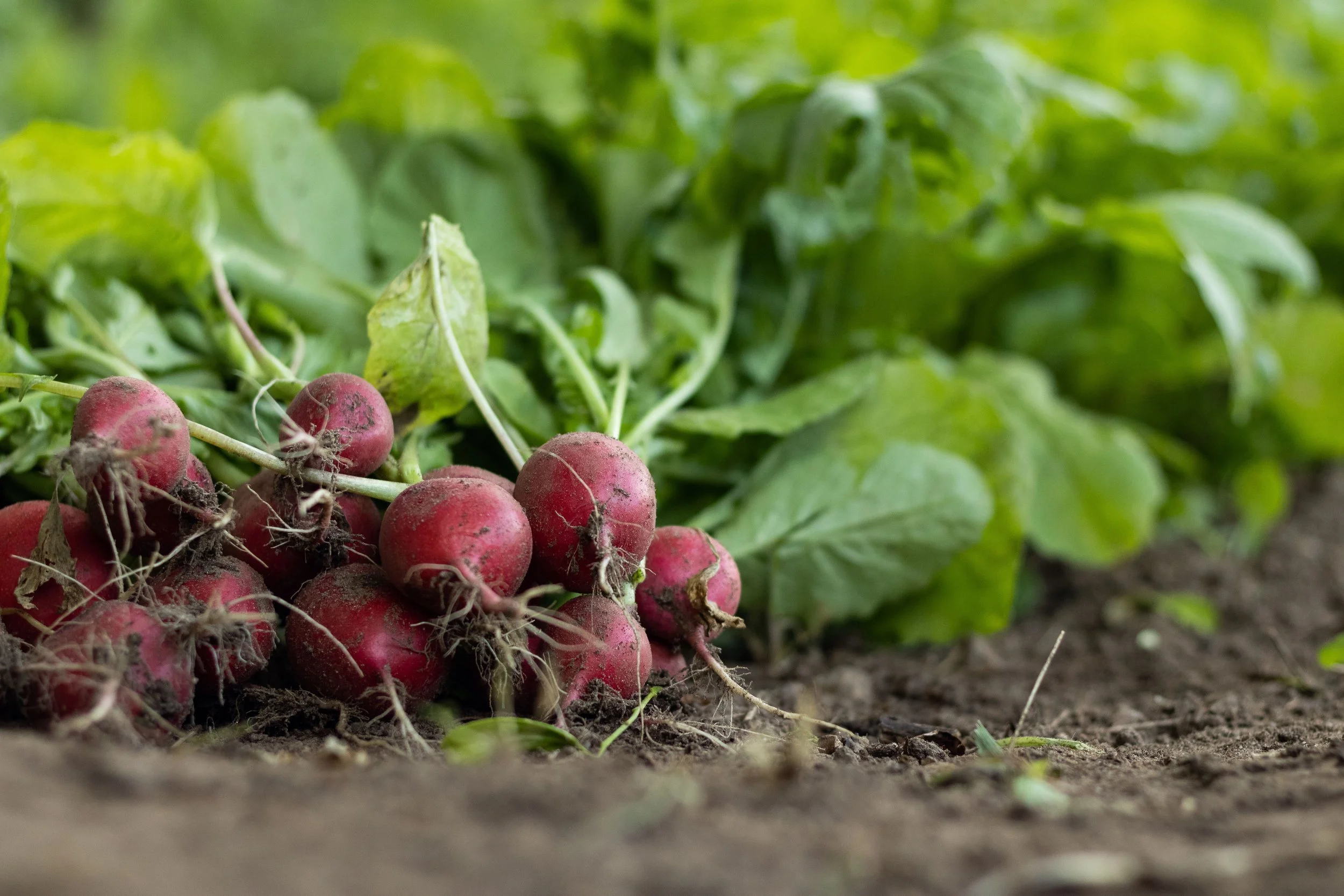
Every spring, somewhere inside the Perimeter, a hopeful gardener pushes a shovel into the ground, hits something with the consistency of a fired brick, and quietly gives up. That first meeting with Georgia red clay has ended more Atlanta gardening plans than drought, deer, and squirrels combined. It is sticky when wet, cement-hard when dry, and it stains everything it touches a permanent orange.
Here is what rarely gets said out loud: red clay is one of the better raw materials for a kitchen garden anywhere in the country. Clay particles are extraordinarily small, which gives them enormous surface area — and surface area is what holds water and nutrients in place instead of letting them wash straight through. Sandy soil drains beautifully and starves your plants. Georgia red clay does the opposite. It hoards. Fertility was never the problem. Structure is the problem, and structure is fixable in a single growing season.
You do not need to haul your yard away or truck in forty cubic yards of topsoil. What you need is a sequence, some organic matter, and the willingness to work with the clay rather than against it. What follows is the process I walk Atlanta clients through — Grant Park, Kirkwood, Decatur, East Atlanta — when the goal is a producing kitchen garden by the end of the year.
Why Atlanta's Red Clay Behaves the Way It Does
The color comes from iron oxide. The density comes from kaolinite, a clay mineral whose plate-shaped particles stack like wet playing cards. Compress those plates and water cannot move through, air cannot circulate, and roots cannot push in. Add decades of construction traffic and grading across most intown Atlanta lots, and you get subsoil sitting where topsoil ought to be.
That is the real inheritance issue in Atlanta. When your neighborhood was built, the organic-rich upper layer was frequently scraped off and sold. What remains is mineral-dense red clay with almost no biology left in it. The minerals are still down there. The life is gone. Your work for one season is to put that life back, and every kitchen garden result you want follows from it.
Start With a Soil Test, Not a Shopping List
Before you buy a single bag of anything, find out what you actually have. The University of Georgia runs low-cost analysis through county Extension offices, and UGA's horticultural and environmental testing services will report your pH along with phosphorus, potassium, calcium, and magnesium levels, plus the specific lime or sulfur adjustment your spot needs. Their guide to soil testing for home lawns and gardens explains how to pull a representative sample.
Two reasons this matters more in Atlanta than almost anywhere else:
pH. Georgia red clay typically runs acidic, often between 5.0 and 5.5. Most kitchen garden vegetables want 6.2 to 6.8. Nutrients already present in your soil stay chemically locked away until that number moves.
Contamination. Intown Atlanta housing stock frequently predates 1978 — old paint, old plumbing, imported fill dirt of unknown origin. UGA's guidance on assessing urban soils for contamination deserves ten minutes before you grow anything you intend to eat.
Guessing costs more than testing. I have watched Atlanta homeowners spend hundreds on amendments their red clay never needed while skipping the one correction that mattered.
Feed the Clay — Do Not Try to Replace It
One rule matters more than the rest: never add sand to Georgia red clay. Clay plus sand plus water is, functionally, mortar. What actually breaks clay apart is organic matter — finished compost, leaf mold, aged manure, shredded leaves. As that material decomposes, it feeds the fungi and bacteria whose sticky byproducts bind clay plates into crumbs. Crumbs are the whole objective — they are what let air, water, and roots move through a soil that previously refused all three.
For a new kitchen garden bed, spread three to four inches of compost across the surface. Fork it into the top six inches once, gently, without flipping the profile upside down — first year only. After that, stop digging. Every disturbance costs you structure you just spent a season building.
Then keep feeding it. Atlanta's municipal leaf collection hands you a free soil amendment every November, and a backyard pile turns kitchen scraps into the same thing. Knowing what you can and can't compost is the difference between a working pile and a smelly one.
Raised Beds or In-Ground? Both Work in Red Clay
There is no universal answer, and UGA offers a useful side-by-side on raised beds versus in-ground gardens. Here is how the tradeoff plays out on Atlanta lots:
In-ground, amended red clay costs the least, holds moisture beautifully through August, and improves permanently year over year. It warms slowly in spring and demands that you correct pH first.
Raised beds give you a usable growing medium immediately, warm faster, and sidestep both drainage and contamination concerns. They cost more up front and dry out faster in July.
The hybrid is what I recommend most often: ten- to twelve-inch beds set directly on broadforked red clay with no landscape fabric between the two. Roots eventually reach the clay's mineral reserve while you get drainage and warmth up top. Most of my kitchen garden designs in Atlanta use this approach.
A One-Season Timeline for Intown Atlanta
Atlanta sits in Zone 8a, which buys a long, forgiving season. Here is the compressed kitchen garden schedule:
January–February. Test. Apply lime if recommended — it needs months to move pH. Sheet-mulch beds with cardboard and shredded leaves.
March–April. Spread compost. Plant cool-season crops: lettuce, kale, carrots, peas, radishes.
May–June. Transition to warm-season crops. Mulch two to three inches deep. Bare red clay crusts within days under Atlanta sun.
July–August. Water deeply and infrequently. Clay holds moisture well below a dry-looking surface, which is exactly why Atlanta's drought conditions punish gardeners who water by the top inch alone.
September–November. Plant a second cool-season round. Sow crimson clover or cereal rye on any resting bed and let roots do the tilling for you.
By the following March, that shovel goes in.
Mistakes That Cost Atlanta Gardeners an Entire Year
Working red clay while it is wet. Squeeze a handful — if it ribbons instead of crumbling, walk away. Compaction created in a wet March lingers for years.
Tilling annually. You are shredding the structure you paid for.
Landscape fabric under beds. It severs your beds from the mineral reserve beneath them.
Skipping mulch. Exposed Georgia red clay bakes into a crust that sheds water rather than absorbing it.
Fertilizing a structure problem. No nutrient fixes compaction, and no kitchen garden thrives on top of it.
Where a Garden Coach Changes the Math
Everything above is doable alone. Building a kitchen garden this way is simply faster, cheaper, and less frustrating with someone who has already done it on soil like yours. A garden coach reads your specific lot — sun angles, slope, drainage, what the previous owner did — and tells you which of these steps you can skip. If you would rather understand the reasoning than follow a checklist, that is precisely what an Atlanta garden consultant is for.
Pixels to Petals grew out of an ordinary realization. After thirty years in digital marketing, I was spending my life staring at screens while the most meaningful hours of my week happened with my hands in the soil. So I traded screen time for green time, permanently.
Pixels to Petals helps intown Atlanta residents make a version of the same trade — not a career change, just a shift toward building something real. A kitchen garden that feeds you year-round with organic herbs, vegetables, and fruit you grew yourself. And because a kitchen garden planted thoughtfully brings bees, birds, and butterflies back with it, your Atlanta yard becomes part of something larger: a healthier local ecosystem, one backyard at a time. Through garden consulting, coaching, and design, I guide clients through every step, from red clay preparation to harvest techniques that keep a kitchen garden producing across all four seasons.
If you have been staring at a patch of Georgia red clay wondering whether a kitchen garden is realistic there, it is — and the season to start is the one you are in. Browse the resource library for Atlanta-specific guidance, get in touch with questions, or Book a 60-minute Garden Consultation with Pixels to Petals. Fifteen minutes is enough to know whether your Atlanta red clay needs lime, compost, raised beds, or simply permission to stop being treated like an enemy.