

Nature's Pharmacy: 8 Medicinal Plants That Naturally Lift Your Mood
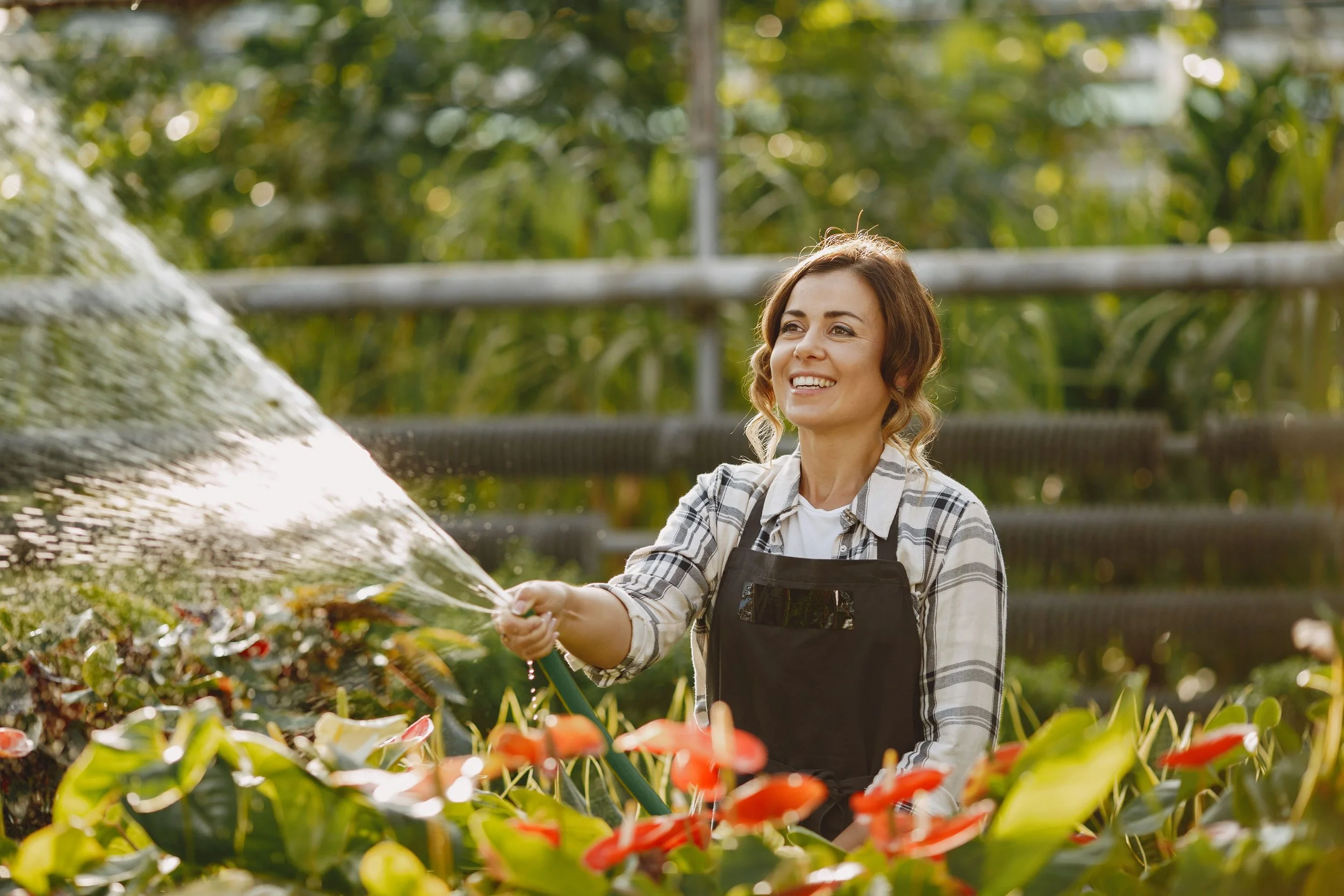
There is a moment that happens to almost everyone who grows herbs. You brush past a plant on your way outside and the scent stops you mid-thought. Your shoulders drop half an inch. It is why so many Atlanta residents build a kitchen garden not for the tomatoes, but for what happens to their nervous system when they walk into it.
Medicinal plants have been used to steady mood and lift heavy days for thousands of years, and research has begun to explain why some of them work. Atlanta sits in USDA Zone 8A, with warmer pockets in 8B, one of the most generous growing regions in the country for these plants. Our long season and mild winters mean many of the world's best-known mood-supporting medicinal plants will grow happily fifteen feet from your kitchen door.
What follows are eight medicinal plants that thrive here, why each affects mood, and how to match them to what you are feeling. None replace care from a licensed professional, and a few interact with prescriptions, so treat them as support rather than substitution.
Why Atlanta's Zone 8A Is Unusually Good for Medicinal Plants
Growers in colder regions treat many of these herbs as fussy annuals. Here, several return stronger every spring. Our challenge is not cold but humidity, heat, and red clay. Get drainage right and you can grow a deep apothecary in a small footprint, which is why the first thing I do as a garden coach is look at soil rather than plant lists.
A few pieces of groundwork make everything else easier:
What garden zone is Atlanta — the frost dates and season length that drive every planting decision
Georgia red clay isn't a curse — how to turn our native soil into real kitchen garden soil in a single season
Which medicinal herbs grow well in Atlanta for first-time growers — the shortest path to a first harvest
The 8 Medicinal Plants That Lift Your Mood
1. Lemon Balm
A mint-family plant that spreads with the same enthusiasm, lemon balm is what to grow if your mind will not stop narrating. Its rosmarinic acid appears to slow the breakdown of GABA, the neurotransmitter that dials down nervous system activity, and most people notice a softer edge on anxious energy without sedation. It handles Atlanta humidity, takes part shade, and belongs in a pot unless you want it everywhere.
2. Passionflower
Passiflora incarnata, or maypop, is native to Georgia and grows wild along roadsides across the metro, so it is already adapted to our rainfall, heat, and clay. It has long traditional use for restlessness and sleeplessness and appears to work through the same GABA pathway as lemon balm. Give it a fence and it rewards you with the strangest flowers in any kitchen garden. For more Georgia natives, start with where to buy native plants around Atlanta.
3. German Chamomile
The apple-scented flowers most people know from tea contain apigenin, which binds to brain receptors linked to reduced anxiety and easier sleep onset. Chamomile is a cool-season grower here: plant in fall or early spring and harvest through May. It self-seeds generously, so one planting often becomes permanent.
4. Holy Basil
Also called tulsi, holy basil is an adaptogen: it helps the body regulate its stress response rather than pushing mood one direction, and trials associate it with reduced stress and better sleep. Where sweet basil sulks in August, tulsi thrives, making it one of the most reliable medicinal plants for our climate.
5. Lavender
Lavender's linalool is among the most studied aromatic compounds in mood research, repeatedly linked to reduced anxiety markers. The catch is that most lavender hates our summers. Grow heat-tolerant types such as 'Phenomenal' or Spanish lavender, plant them high in sharply drained soil, and resist the urge to water. Any garden designer working in Atlanta sites lavender along a walkway, since brushing it as you pass is its own daily dose.
6. Rosemary
Rosemary is the plant for foggy, unfocused days. Blood levels of its 1,8-cineole, absorbed just from breathing the aroma, track with better performance on attention and working-memory tasks. The research is about thinking clearly rather than feeling happier, so treat rosemary as the one that cuts through mental fog rather than one that lifts your mood directly. In Atlanta it is a nearly indestructible evergreen shrub, and a garden designer will place it near a door or seating area for exactly that reason.
7. St. John's Wort
The most rigorously researched of the mood-supporting medicinal plants, St. John's wort has been studied extensively for mild to moderate depression, with several reviews finding it comparable to standard treatments in that range. It is the one plant here with a real evidence base for depression specifically. It also carries the most serious cautions here, interacting with antidepressants, birth control, blood thinners, and many other prescriptions. Talk to your doctor first. One more thing worth knowing: it is a Eurasian plant, not a Georgia native, and it spreads aggressively by both seed and creeping root, enough to be listed as a noxious weed in several states. Georgia does not regulate it, but grow it in a container or a bed you can keep an eye on. In our climate it needs excellent drainage and airflow to survive August.
8. Ashwagandha
Another adaptogen, ashwagandha, has been shown in pooled clinical trials to lower cortisol, the body's main stress hormone. Worth noting that the same analyses did not find a matching drop in how stressed people said they felt, so the marker moves more reliably than the mood does. It is also the most demanding plant here: it comes from hot, dry uplands and resents humidity and heavy clay, so give it a container of fast-draining, sandy mix rather than a spot in the ground. In Zone 8A it often overwinters as a tender perennial, though most growers harvest the root at the end of the season.
Matching Medicinal Plants to What You Are Actually Feeling
For anxiety and racing thoughts: lemon balm, passionflower, and chamomile are the most commonly recommended medicinal plants, all working on the GABA system. Lavender supports them aromatically.
For low mood and depression: St. John's wort is the best-evidenced option, with the cautions above taken seriously. Rosemary helps the mental fog that travels with low mood.
For burnout and chronic stress: the adaptogens, holy basil and ashwagandha, are built for the long grind rather than the acute spike.
For sleep, which drives everything else: chamomile and passionflower, as an evening ritual rather than an occasional rescue.
The Soil Itself Is Part of the Medicine
Here is the part that surprises people. The benefit does not start when you drink the tea. It starts when your hands go into the ground. Researchers studying Mycobacterium vaccae, a common soil bacterium, found that in mice it activated serotonin-producing neurons and reduced stress-related behavior. That work used injected or fed bacteria, so whether ordinary contact with garden soil does anything comparable in people is still an open question. It is a promising explanation rather than a proven one. What is not in question is that the organism is everywhere in soil rich in organic matter, and you meet it every time you dig.
The better-established benefits are less microscopic. Gardening delivers sunlight, gentle movement, and a task with a visible beginning and end, which is rare in modern work. It demands attention to something outside your own head and runs on a timeline that cannot be rushed. In Atlanta, where our clay takes real effort to amend, that hands-in-the-dirt time is not a chore standing between you and a kitchen garden. It is a meaningful share of the benefit.
Building It Into a Real Atlanta Kitchen Garden
A kitchen garden is not a separate herb patch behind the garage. It is a working space meant to be visited daily, which is what makes it effective for mood. Proximity is the whole strategy: walk to the back fence and you will go twice a week, but off the kitchen you will go twice a day. That placement question is most of what a garden designer or garden coach solves on a first visit.
Small spaces are no barrier. Some of the most productive intown kitchen garden setups sit on balconies, and nearly every plant here grows well in containers:
The balcony apothecary: medicinal herbs you can grow in pots
The mental health case for hiring an Atlanta gardening coach
About Pixels to Petals
Pixels to Petals exists because of that exact tension. After thirty years in digital marketing, staring at screens and helping sell products I did not care about, the most meaningful hours of my week were spent with my hands in the soil growing herbs and vegetables in Boca Raton, Fort Lauderdale, and eventually Atlanta. Those hours were the antidote, so I traded screen time for green time, permanently. The full story is here.
The work now is helping intown Atlanta residents make a version of that trade. Not a career change, necessarily, but a lifestyle shift toward less time online and more time creating something real: a kitchen garden that feeds you year-round with organic herbs, vegetables, and fruits you grew yourself. As a garden coach and garden designer, I guide clients through every step, from Atlanta's red clay to harvest techniques that keep a kitchen garden producing all four seasons. Whether you want a design, ongoing coaching, or a single consultation, the goal is a space you actually use.
It goes past the harvest. The right herbs and flowers invite pollinators back into your yard, and your Atlanta kitchen garden becomes part of something larger: a healthier local ecosystem, one backyard at a time. See where I work across intown Atlanta, browse the resource library, or get in touch.
Start With One Plant, One Bed, One Season
You do not need all eight medicinal plants to feel the difference. Start with lemon balm in a pot and rosemary by the door, add chamomile this fall, and let the kitchen garden grow as your interest grows. People come for the medicinal plants and stay for the twenty minutes of quiet each morning the garden asks of them.
If you are staring at a patch of red clay wondering where to begin, that is the most common starting point in Atlanta, and it is the problem a garden coach solves fastest. Working with a garden coach or garden designer saves you two seasons of trial and error and several hundred dollars in plants that were never going to survive August.
Book a 60-Minute Garden Consultation with Pixels to Petals, and let's figure out what your space can grow. An hour with a garden coach and garden designer is usually enough to turn a vague idea into a plan you can plant.