

Wild and Well-Fed: The Intown Atlanta Guide to Edible Native Plants
Most Atlanta yards are planted with things that were never meant to live here — Asian hollies, Japanese boxwood, ornamental pears that snap in half during the first serious ice storm. They ask a lot and give back very little. Meanwhile, the woods behind your neighborhood are quietly producing custard-flavored fruit, wild plums, tea leaves, and nuts that fed people on this land for thousands of years.
Edible native plants are the rare category where every priority lines up at once. They're adapted to Georgia red clay and Zone 8a's brutal humidity, they feed pollinators and songbirds, they need a fraction of the irrigation your hydrangeas demand, and they put food on your table. The only real hurdle for intown gardeners is sourcing — which is why the question of where to buy native plants in Atlanta comes up in nearly every consultation I do inside the Perimeter.
Here's the comprehensive list, organized by how you'd actually use them in a garden design.
Fruit and Nut Trees for Intown Atlanta Yards
Small lots inside I-285 can absolutely support a productive canopy. These native plants stay reasonably scaled and thrive without spray programs.
Pawpaw (Asimina triloba) — North America's largest native edible fruit, with a flavor somewhere between banana, mango, and vanilla custard. Plant two genetically distinct trees for pollination. Understory tolerant, which makes it perfect for shaded Grant Park and Kirkwood lots.
American Persimmon (Diospyros virginiana) — Astringent until fully soft, then remarkably sweet and date-like. Wait for the fruit to drop. Female trees need a male nearby to fruit reliably.
Serviceberry (Amelanchier arborea) — Also called Juneberry or sarvis. White spring flowers, blueberry-like June fruit, and orange fall color. One of the best four-season small trees for a front yard.
Red Mulberry (Morus rubra) — Fast, generous, and messy in the best way. Fruit ripens over several weeks in late spring. Site it away from patios and driveways.
Chickasaw Plum (Prunus angustifolia) — A thicket-forming small tree with clouds of early white bloom and tart red-yellow plums ideal for jam.
American Plum (Prunus americana) — Larger fruit than Chickasaw, excellent for preserves, and a magnet for early-season bees.
Black Cherry (Prunus serotina) — The fruit makes exceptional jelly and cordial. Note that only the ripe flesh is edible; leaves, twigs, and pits are not.
Mayhaw (Crataegus aestivalis) — A wetland hawthorn behind Georgia's most legendary jelly. Give it a low, damp corner of the yard.
Eastern Redbud (Cercis canadensis) — The magenta spring flowers are edible raw, tangy and pea-like in salads. Young seed pods can be cooked like snap peas.
Black Walnut (Juglans nigra) — Intensely flavored nuts worth the labor of hulling. Be aware of juglone, which suppresses tomatoes and many other garden crops nearby.
Shagbark and Mockernut Hickory (Carya ovata, C. tomentosa) — Sweet, rich nuts, plus the syrup made from shagbark's bark. Long-lived shade trees for larger lots.
Allegheny Chinquapin (Castanea pumila) — A shrubby chestnut relative producing small, sweet nuts. More blight-resistant than American chestnut.
Berry Shrubs and Fruiting Vines
This is where most people should start. Fast returns, minimal fuss, and the plants that most often prompt clients to ask me where to buy native plants that actually produce.
Rabbiteye Blueberry (Vaccinium virgatum) — The Southeast's workhorse blueberry. Plant at least two cultivars for cross-pollination and acidic soil, which our red clay tends to provide naturally.
Highbush Blueberry (Vaccinium corymbosum) — Prefers moister ground than rabbiteye; ideal along downspout drainage lines.
Deerberry (Vaccinium stamineum) — Tart, underappreciated, and outstanding cooked into pies and syrups.
Southern Blackberry (Rubus argutus) — Vigorous and thorny. Give it a trellis and a boundary, or it will give itself one.
Black Raspberry (Rubus occidentalis) — Arching purple canes and a deeper, more complex flavor than red raspberry.
Muscadine (Vitis rotundifolia) — Georgia's signature grape. Thick-skinned, musky-sweet, disease-resistant, and capable of covering an arbor in two seasons.
Elderberry (Sambucus canadensis) — Flat white flower heads for cordial, dark berries for syrup and wine. Always cook the berries; never eat them raw.
American Beautyberry (Callicarpa americana) — Those electric-purple berry clusters make a distinctive rose-colored jelly. The crushed leaves also repel mosquitoes.
Maypop / Purple Passionflower (Passiflora incarnata) — Otherworldly flowers and egg-shaped fruit with sweet, aromatic pulp. Host plant for Gulf fritillary butterflies.
Smooth and Winged Sumac (Rhus glabra, R. copallinum) — The red drupes steep into a tart, lemonade-like drink and dry into the spice used across Middle Eastern cooking.
Groundnut (Apios americana) — A nitrogen-fixing vine with starchy, protein-rich tubers and chocolate-scented flowers.
Aromatic Native Plants for Tea, Spice, and Seasoning
Spicebush (Lindera benzoin) — Leaves, twigs, and berries carry a warm allspice-meets-citrus flavor. Dried and ground, the berries are a legitimate pantry spice.
Sassafras (Sassafras albidum) — Dried young leaves become filé powder, the thickener in Louisiana gumbo. Use leaves rather than root bark.
Yaupon Holly (Ilex vomitoria) — The only caffeinated plant native to North America, roasted into a smooth, low-bitterness tea. Native to Georgia's coastal plain but perfectly happy in Atlanta landscapes.
New Jersey Tea (Ceanothus americanus) — Leaves brew a caffeine-free tea used widely during the Revolutionary era. A compact, drought-proof shrub.
Anise-Scented Goldenrod (Solidago odora) — Crush a leaf and you get licorice. Makes a lovely tea and, contrary to myth, does not cause hay fever.
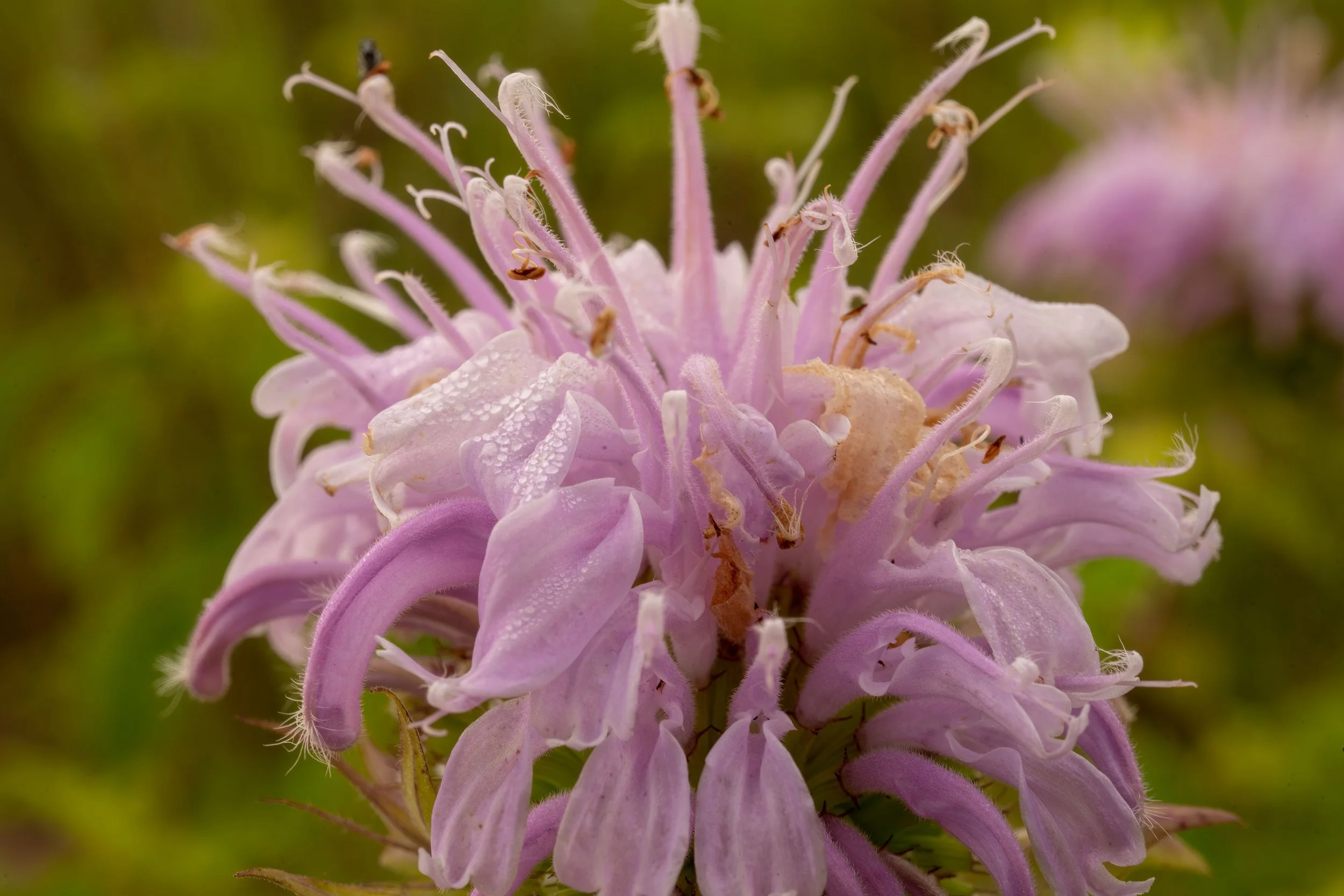
Bee Balm (Monarda didyma) and Wild Bergamot (M. fistulosa) — Oregano-thyme flavor, edible flowers, and among the best hummingbird plants available.
Mountain Mint (Pycnanthemum incanum, P. muticum) — Genuinely minty, tough as nails, and consistently the most pollinator-visited plant in trial gardens.
Perennial Greens, Roots, and Wild Vegetables
Sochan / Green-Headed Coneflower (Rudbeckia laciniata) — A traditional Cherokee spring green, harvested young and cooked like chard. Returns reliably for decades.
Ramps (Allium tricoccum) — Slow to establish and worth every year of the wait. Needs deep shade and moisture; harvest one leaf per plant, never the bulb.
Meadow Garlic (Allium canadense) — Grows readily across the Piedmont. Use the greens like chives and the bulbs like small garlic.
Common Blue Violet (Viola sororia) — Both flowers and leaves are edible. Candy the blooms or fold the mild, mucilaginous leaves into salads.
Sunchoke (Helianthus tuberosus) — Tall sunflowers above knobby, nutty tubers you dig after frost. Contain it — it spreads enthusiastically.
Wood Sorrel (Oxalis stricta) — Bright, lemony clover-shaped leaves. Use as a garnish rather than a bulk green.
Partridgeberry (Mitchella repens) — An evergreen groundcover with mild red berries for shaded, difficult slopes.
Wild Ginger (Asarum canadense) — Aromatic rhizome historically used as a ginger substitute. Use very sparingly and occasionally, as it contains aristolochic acid.
A note on caution: pokeweed appears on many foraging lists, but it requires precise preparation to be safe and I don't recommend it for home gardens. When in doubt about identification or edibility, don't eat it — and buy from a reputable grower rather than digging from the wild, which is one more reason where to buy native plants in Atlanta is worth getting right.
Where to Buy Native Plants in Atlanta
Sourcing stalls many people. Big-box garden centers rarely stock true species natives, and cultivars labeled "native" are sometimes bred in ways that reduce their value to wildlife. I've put together a dedicated breakdown of where to buy native plants around Atlanta, covering specialty nurseries, seasonal plant sales, and mail-order growers who ship into Zone 8a.
A few things worth knowing before you start working out where to buy native plants for an edible landscape:
Buy small. One-gallon natives establish faster and outgrow three-gallon stock within two seasons.
Fall is the ideal planting window here — see what to plant in October for timing.
Amend thoughtfully rather than aggressively; Georgia red clay is workable soil, not a curse.
Pair edible natives with herbs that attract pollinators to boost fruit set.
Most of these species prefer in-ground beds over raised beds in our climate.
Knowing where to buy native plants matters. Knowing which ones suit your light, drainage, and lot size matters more — that's the gap I help intown clients close.
Growing Something Real with Pixels to Petals
After three decades in digital marketing, I traded screen time for green time — permanently. Pixels to Petals grew out of that decision, and out of the recognition that the most grounding hours of my week were the ones spent with my hands in the soil rather than in front of an analytics dashboard.
I work exclusively with intown Atlanta residents inside the Perimeter — Grant Park, Ormewood Park, Summerhill, Kirkwood, and the surrounding neighborhoods listed on my service areas page. Depending on where you're starting, that looks like garden design for a site that needs a real plan, garden consulting for a focused problem-solving session, or ongoing garden coaching if you want to build the skills yourself over a full season.
Edible natives are also the fastest route to a yard that feeds more than your kitchen. Plant a serviceberry, a stand of blueberries, and a patch of mountain mint, and pollinators, songbirds, and butterflies show up within a season — your garden becomes part of a healthier Atlanta, one backyard at a time. More guides on soil, seasonal timing, and plant sourcing live in the resources library, and you can always reach out directly.
Don't Lose a Season to the Wrong Plant
Here's what usually happens when people try this alone. They buy a single pawpaw and wait three years for fruit that never comes, because pawpaws need a second, genetically distinct tree to set. They put persimmons in the only sunny spot and get nothing, because the tree is male. They plant blueberries in a bed that was limed for a lawn twenty years ago and watch the leaves yellow while they wonder what they did wrong. They order six natives online, get four that were bred for the Upper Midwest, and lose the whole planting to an Atlanta August.
None of those are gardening failures. They're information failures — and every one of them costs a full season, sometimes three. Trees and perennial natives are slow to reveal a mistake, which is exactly what makes getting the first decisions right so valuable.
Your first harvest is only as far away as the season you start. Make it this one.
Book at 60-minute Garden Consultation with Pixels to Petals.